Explore Our Latest News & Articles
Whether you're a first-time buyer or upgrading to your dream vessel, navigating the financing process can feel overwhelming. This checklist breaks it down step-by-step so you can hit the water with confidence — and a plan.
✅ 1. Know What You Can Afford
☐ Before you start shopping, it's important to understand what kind of loan and monthly payments you can realistically manage.
☐ Review your monthly budget to determine a comfortable loan payment.
☐ Consider total cost of ownership: insurance, maintenance, storage, registration, fuel, and upgrades.
☐ Use an online boat loan calculator to estimate payments based on loan term and interest rates.
Tip: Use the BoatUS Boat Loan Calculator to model different scenarios. Reach out to marine insurance brokers early in your search—they can help you estimate premiums for your target vessel, and most lenders will require proof of insurance at closing.
Supporting Articles:
Before You Leap: Building a Budget for Life Afloat (Waterway Guide)
Navigating Boat Insurance (Waterway Guide)
✅ 2. Check Your Credit
Your credit score and debt-to-income ratio (DTI) will significantly affect your loan approval, interest rate, and terms.
☐ Request a free credit report from all three bureaus via AnnualCreditReport.com.
☐ Find out your credit score — check with your bank or credit card provider, or purchase from a credit bureau.
☐ Review your debt-to-income (DTI) ratio — total monthly debt payments ÷ gross monthly income.
Tip: Lowering your DTI (ideally below 40%) can improve your chances of approval and help you secure better terms.
Supporting Articles:
Debt-To-Income Ratio (DTI) Explained for Boat Loan Borrowers (Boat Trader)
✅ 3. Choose a Loan Type
There are several financing options to consider depending on your needs, the vessel, and your financial profile.
☐ Decide between a secured loan (typically backed by the boat) or unsecured loan (based on creditworthiness).
☐ Explore fixed-rate vs. variable-rate loan options.
☐ Consider using a home equity line of credit (HELOC) if you have sufficient home equity and want more flexibility or lower rates.
☐ Compare offers from marine lenders, credit unions, and banks.
Tip: Some lenders specialize in older boats, liveaboard loans, or unique vessels—be sure to ask! HELOCs may offer lower interest rates and tax benefits, but they put your home at risk if you default. Discuss with a financial advisor before using home equity to finance a boat.
Supporting Articles:
Boat Financing: How to Secure a Boat Loan (Discover Boating)
✅ 4. Get Prequalified or Preapproved
Before you start boat shopping, getting prequalified gives you a ballpark range—getting preapproved gives you negotiating power.
☐ Gather documentation: proof of income, tax returns, ID, and assets/liabilities.
☐ Submit paperwork for prequalification or preapproval with your preferred lender.
☐ Understand the difference—preapproval typically carries more weight and may lock in rates.
✅ 5. Understand Documentation & Legal Requirements
Most marine lenders require eligible vessels to be federally documented with the U.S. Coast Guard so they can issue what's called a Preferred Ship Mortgage—a legal lien placed on the vessel as collateral.
☐ Ask your lender if federal documentation is required for your boat loan.
☐ If yes, inquire whether they offer documentation services as part of the process.
☐ If not, check with your broker to see if they provide this service at closing or have a recommended documentation provider.
Tip: A Preferred Ship Mortgage prevents changes in ownership or vessel documentation without the lender's consent, offering an extra layer of protection for all parties during the loan term.
✅ 6. Prepare for the Survey & Appraisal
A marine survey is typically required by both lenders and insurers for used boats—and it's a smart step even for cash buyers. The survey assesses the vessel's condition, market value, and seaworthiness.
☐ Ask your lender if a marine survey is required (most will require it for pre-owned vessels).
☐ If required, hire a qualified marine surveyor early in the process.
☐ Confirm whether the lender or insurance provider has any requirements for surveyor credentials.
☐ Understand how your lender will use the survey: they will typically compare the purchase price, NADA value, and survey appraised value to determine loan terms and approval.
Tip: Surveyors can be found through the Society of Accredited Marine Surveyors (SAMS) or the National Association of Marine Surveyors (NAMS). Your broker may offer suggestions for local surveyors, but be aware—not all surveyors have the same standards. Some may be more lenient than thorough. It's worth doing your homework to ensure the surveyor is truly qualified and impartial.
✅ 7. Finalize the Deal & Close
Once financing is approved and the survey is complete, you're ready to close on your new boat.
☐ Review your loan terms, closing costs, and repayment schedule one last time.
☐ Secure proof of insurance and finalize documentation.
☐ Make the down payment and sign final paperwork.
Tip: Be patient—marine financing often takes longer than car loans. Communicate regularly with your broker and lender.
✅ 8. Stay on Track Post-Purchase
Once you've signed the final documents and officially taken ownership, keep your investment protected and your finances healthy with a few smart steps.
☐ Keep up with loan payments — Consider setting up autopay to avoid missed or late payments, which could impact your credit.
☐ Renew insurance and documentation annually — Many policies and documentation requirements must be renewed each year. Set calendar reminders so you don't fall behind.
☐ Track maintenance and upgrades — Keeping a log of maintenance and upgrades can help preserve the value of your vessel and streamline future survey or sale processes.
☐ Review your budget periodically — As you settle into boat ownership, revisit your monthly and annual budget to account for new realities like fuel, haul-outs, slip fees, and repairs.
☐ Explore refinancing options — If your credit improves or interest rates change, it may be worth checking with your lender about refinancing.
Tip: You may be able to deduct mortgage interest on your boat loan if it qualifies as a second home — consult your tax advisor to learn more.



- 4,000 Marinas
- Thousands of anchorages
- Updated Charts
- Mile-by-Mile Navigation
- Highlighted Alerts & Cautions
- Full-Color Aerial Photographs
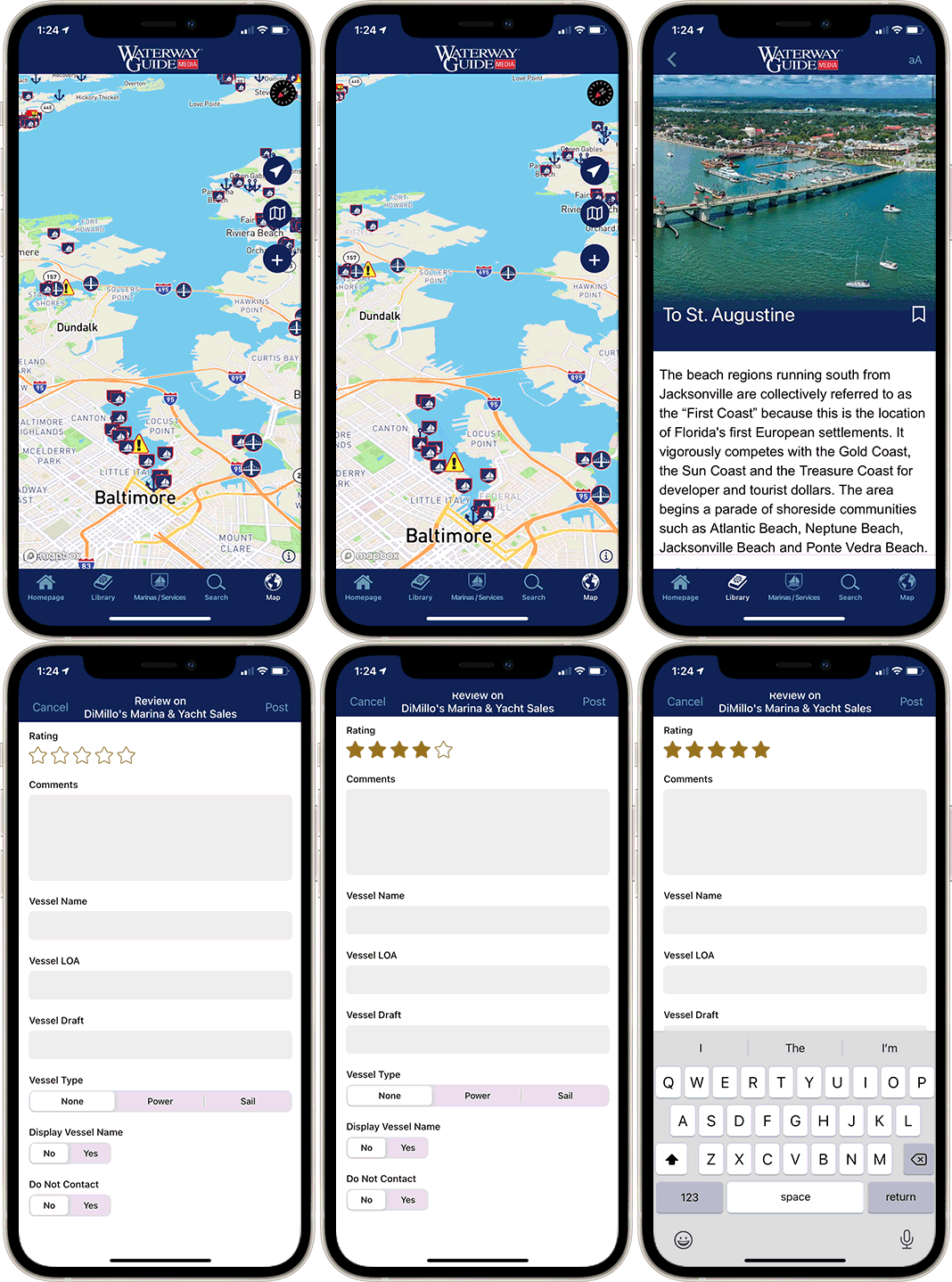
The Waterway Guide App Makes it easy to leave reviews, use our explorer, and view waterway guide materials all on the go!